What Altea is really like in winter (January)
In January on the Alicante coast, the average high is around 17°C and the average low around 6°C, it rains on about four days in the month and there are some 180 hours of sunshine. What changes most from August isn’t the weather but the light and the people: the day lasts nine and a half hours and Altea goes back to the people who live here. If you’ve only ever visited in summer, here’s what a winter here is actually like, with figures.

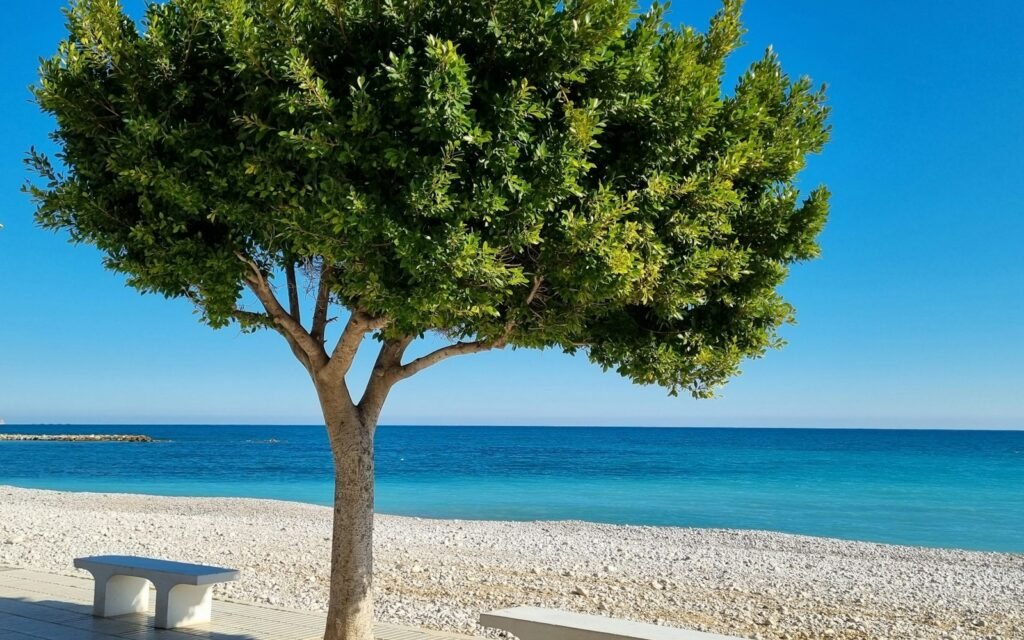
- In January, the nearest Spanish Met Office (AEMET) station with official averages records an average high of 17°C and low of 6.3°C, 23 mm of rain and 181 hours of sunshine. Frost is almost unheard of.
- On 1 January the sun rises at 8:18 and sets at 17:49: about nine and a half hours of daylight, against nearly 14 in mid-August.
- Altea has 24,592 registered residents, around 9,700 of them foreign nationals. In January, fewer than half as many foreign tourists arrive as in August.
- The town doesn’t shut down: the health centre, schools, everyday shops and the Tuesday market carry on.
Altea weather in January, in figures
Altea has no AEMET station with published long-term averages. The nearest one is Alicante, about 45 km away in a straight line and also on the coast. Its 1981-2010 averages are the best official reference there is:
| December | January | February | |
|---|---|---|---|
| Average high | 17.7°C | 17.0°C | 17.6°C |
| Average low | 7.4°C | 6.3°C | 7.1°C |
| Average temperature | 12.6°C | 11.7°C | 12.3°C |
| Rainfall | 25 mm | 23 mm | 22 mm |
| Rainy days (1 mm or more) | 3.8 | 3.6 | 3.0 |
| Hours of sunshine | 164 | 181 | 180 |
In practice: T-shirt weather at lunchtime when the sun’s out, and a jacket in the evening. January averages 0.4 days of frost and no snow on the coast. Humidity is around 67%, and you feel it: 8°C and damp inside a cold house feels colder than 8°C and dry.
These are averages from a seafront station. If the house is up on a hillside urbanisation or further inland, nights can be cooler. Ask the neighbours.
Daylight hours in winter
This is what surprises people who only know Altea in August.
- 1 January: sunrise 8:18, sunset 17:49. About nine and a half hours of daylight.
- 31 January: 8:07 to 18:19. Already over ten hours.
- 15 August: 7:14 to 20:57. Nearly 14 hours.
You lose about four hours of daylight compared with summer, mostly in the evening. The 8 pm stroll you take in August becomes a 5 pm stroll in January. In return, with 181 hours of sunshine in the month, the light you do get is usually bright.
Who’s still here in winter
On 1 January 2025, Altea had 24,592 registered residents. According to the INE census at that date, 9,659 residents were foreign nationals, nearly four in ten. Those are the people who are here in January.
There’s no official figure for how many people are in Altea in summer, but there is data that shows the shift. Spain’s statistics office (INE) uses mobile phone positions to estimate how many foreign tourists arrive in each town:
| Foreign tourists in Altea (2025) | January | August |
|---|---|---|
| All countries | 8,606 | 19,945 |
| From the UK | 1,226 | 4,244 |
| From Norway | 977 | 1,764 |
Read it with care: these are tourists arriving in the month, not people in town at the same time, and Spanish holidaymakers aren’t included. But the pattern is clear. Fewer than half as many arrive in January as in August. British visitors cluster in summer; Norwegians spread out much more across the year, and their busiest month in 2025 was October.
Holiday lets follow the same rhythm: the INE counted 1,243 tourist dwellings in Altea in May 2025 and 884 in November.
For anyone moving here, the useful number is the first one. Thousands of foreign residents, British, Dutch, Belgian, Scandinavian and more, live in Altea all year. The off-season community is real; it’s just quieter.
What stays open in Altea in winter (and what doesn’t)
Altea is a working town, not a seasonal resort. In winter you still have:
- the health centre and local surgeries;
- the schools;
- supermarkets, chemists, banks and everyday shops;
- the Tuesday market, which runs all year;
- the TRAM towards Benidorm and Dénia.
What drops off is what depends on tourism. Some beach and leisure businesses close for a few weeks or cut their hours in the low season. It’s not a ghost town, but the pace is different: calmer and more local.
If you only know Altea in August, spend a week here in January before you decide. See which bars on your street stay open, what time the promenade empties and how the house feels at night.
What happens in Altea in winter
Winter starts with the town hall’s Christmas programme, which last season ran from 5 December to 6 January. It ends with the Three Kings (Reyes), with two parades: one in town on the evening of 5 January, from the old bakery along Avinguda Jaume I to Plaça dels Esports, and one in Altea la Vella on the morning of the 6th.
Dates and events change every year, so check the town hall’s listings when December comes round.
Doctors and hospital
Altea is in the Marina Baixa health department. There’s a health centre in town and smaller surgeries, such as the ones in the old town and in Altea la Vella. The public hospital for the area is the Hospital Comarcal de la Marina Baixa in La Vila Joiosa (Villajoyosa), about 18 km by road from the centre of Altea.
If you’re going to live here all year, ask at the health centre what you need to register as a patient. If you’re weighing up the town against Altea la Vella for distance to the doctor, I compare them in Altea Old Town or Altea la Vella.
What to check in a home with winter in mind
- Heating: ask what system it has and to see a winter bill. Air conditioning with a heat pump is not the same as underfloor heating.
- Orientation: with nine and a half hours of daylight, a south-facing home makes a difference. View it in the afternoon, not just at midday.
- Damp: look at walls, wardrobes and corners. A house shut up all winter can get damp.
- The energy certificate: it gives you a clue about insulation. Here’s how to read it: the energy certificate.
If you’re buying from abroad and want to know how the whole process works, read buying property in Spain as a foreigner.
See what we have in Altea right now and tell me what matters to you: light, heating, being near the doctor or the TRAM.
Frequently asked questions
Is Altea cold in winter? +
Not very. In January, AEMET’s Alicante station records an average high of 17°C and an average low of 6.3°C. What you notice is the damp indoors at night.
How many hours of daylight does Altea get in January? +
About nine and a half hours at the start of the month, from 8:18 to 17:49, and just over ten by the end of January.
Is Altea dead in winter? +
No. It has 24,592 registered residents and services open all year. Fewer tourists come: in January 2025, 8,606 foreign tourists against 19,945 in August.
Where is the nearest hospital to Altea? +
The Hospital Comarcal de la Marina Baixa in La Vila Joiosa, about 18 km by road. There’s a health centre and surgeries in Altea itself.
Founder of maXcasa International. Thirty years buying and selling homes on the Costa Blanca North, with clients from all over Europe.
Meet Max →