How to transfer the money home after selling your Spanish property
You can take the money from your Spanish sale home without limits. Spain has no capital controls, and a bank transfer from your own account needs no declaration from you. What you do need is to know how you’ll be paid on the day, what gets kept back, how the 3% comes back and what your bank will ask before the money leaves.

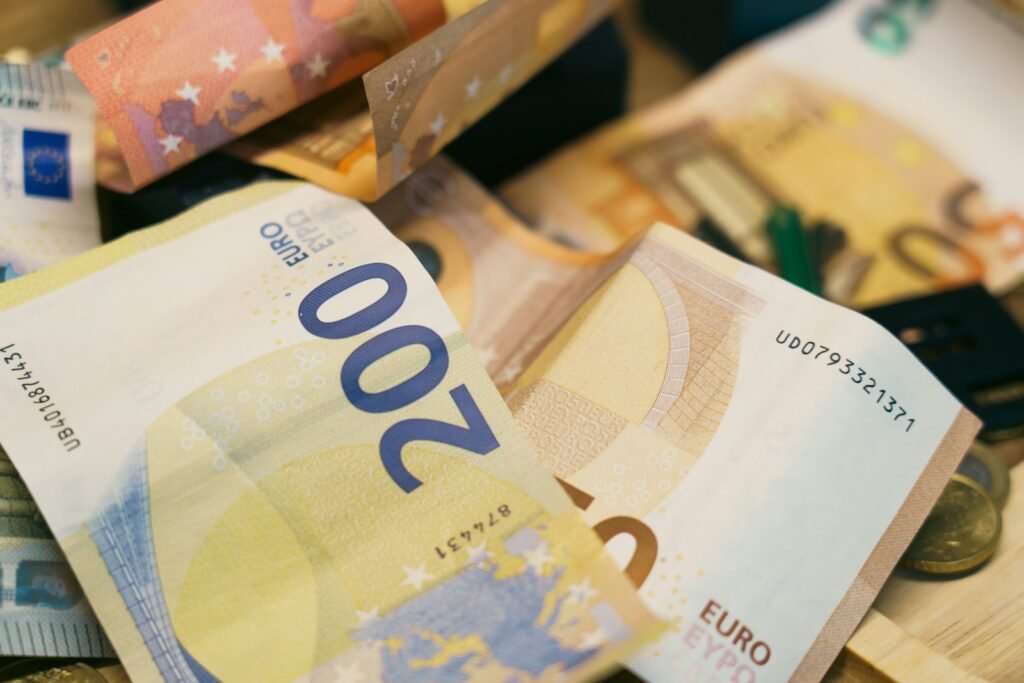
- The buyer pays at the notary by bank cheque or bank transfer, and the notary records exactly how in the deed.
- Because you’re a non-resident, the buyer keeps back 3% of the price for the tax office. It comes back, in full or in part, only when you file form 210.
- Moving your money abroad by bank transfer needs no declaration from you. Declarations apply to cash and bearer instruments of €10,000 or more crossing the border.
- Your bank will check where the money comes from. The deed of sale answers that question.
How the buyer pays you at the notary
The sale is completed when buyer and seller sign the deed (escritura) before a Spanish notary. At that moment, the rest of the price changes hands. In practice there are two ways to do it:
- A bank cheque (cheque bancario) made out to you by name, issued by the buyer’s bank. You, or your representative, pay it into an account.
- A bank transfer to your account, made on the day or beforehand.
The law requires the notary to identify the means of payment in the deed: how much was paid before signing and how much at signing, and whether it was cash, a cheque (bank or personal, named or bearer) or a transfer. If someone refuses to say how a payment was made, the notary records the refusal and it’s passed on to the tax authorities. So everything has to be traceable, and it’s in your interest that it is: the deed becomes your proof of where the money came from.
Agree in advance where the money will land. If you don’t have a Spanish account, tell the buyer’s side early that you’d rather receive a transfer to an account in your name. If you’re selling with a power of attorney, check that it allows your representative to receive payment.
What’s kept back on the day
You rarely walk away with the full price. Some amounts are paid out at the signing or kept back by the buyer:
| Amount | Why | Does it come back? |
|---|---|---|
| 3% of the price | Advance on your non-resident tax, paid by the buyer with form 211 | The part above your real tax, after you file form 210 |
| Outstanding mortgage | Paid off at signing so the house is sold free of charges | No, it’s your debt |
| Plusvalía (possibly) | The buyer is answerable to the town hall when the seller is a non-resident, so may ask to keep it back | Any excess, once the town hall’s assessment is paid |
| The rest | Paid to you by bank cheque or transfer | It’s yours to move |
If there’s still a mortgage on the house, the bank cancels it at the signing with part of the price. We explain how in selling a property with a mortgage. And the plusvalía itself is covered in our guide to the plusvalía in Altea and Albir.
The 3% and how it comes back
The buyer pays the 3% to the Spanish tax agency with form 211 within a month of the sale and gives you a copy. It’s an advance on your tax on the gain, which is 19%. You then file form 210 in the three months after that first month. If your tax is lower than the 3%, or you made a loss, you get the difference back.
The refund is paid by bank transfer to an account in your name, which can be in Spain or abroad. So it can go straight to your UK, Norwegian or Swedish account. If it’s paid into an account in your representative’s name, that account has to be Spanish.
Without form 210 there’s no refund. The tax office won’t send the money back on its own.
The deadlines and a worked example are in the 3% retention when a non-resident sells.
Moving the money out of Spain: what you have to declare
Spanish law says transfers to and from abroad are free. There’s no permission to ask for and no limit on the amount. The declarations that exist are about physical money, not bank transfers:
| Situation | Threshold | Who declares |
|---|---|---|
| Bank transfer from your account to your account abroad | No threshold | Nothing for you to declare |
| Carrying cash or bearer instruments in or out of Spain | €10,000 or more | You, before travelling |
| Carrying cash or bearer instruments within Spain | €100,000 or more | You, before moving it |
| Bank’s report to SEPBLAC, Spain’s anti-money-laundering unit | Physical cash or bearer cheques over €30,000 not paid into an account | The bank |
| Banco de España statistical return | For residents in Spain; below €1 million only if requested | Not you, as a non-resident |
«Bearer instruments» means things like cheques made out to the bearer or left blank. A bank cheque made out to you by name isn’t one of them. If you were ever tempted to carry the money in cash or bearer cheques, don’t: on top of the declaration, it creates exactly the kind of trail that’s hard to explain later.
Source-of-funds checks: have the deed ready
Spanish banks, like notaries, are bound by the anti-money-laundering law. They have to know the purpose of your accounts and keep an eye on your transactions, including where the funds come from. A large payment arriving and then leaving for another country is exactly what they’re required to look at.
In practice, before releasing a large transfer, your bank may ask you to explain it and send documents. Keep these ready:
- A copy of the deed of sale, which shows the price and how it was paid.
- Your passport and NIE.
- The copy of form 211 from the buyer, if you have it.
- Details of the receiving account in your name.
Your bank at home may ask the same questions when the money arrives. Sending the deed on request usually settles it. If you’re selling with us from abroad, getting you these papers is part of the job, together with the NIE, the notary and the taxes.
A short message to both banks before the signing, saying that the proceeds of a property sale are on their way and when, can save days of blocked funds.
Your bank or a currency specialist?
If you’re moving euros to a euro account, a SEPA transfer is usually straightforward. If the money has to become pounds, kroner or krona, the cost lies mostly in the exchange rate you’re given, more than in the fixed fee.
You can use your own bank or a payment company that specialises in currency transfers. Neither is better by definition. Whichever you choose:
- Ask for the total. Before you send, the provider must tell you all its charges and the exchange rate it will apply. Afterwards, it must tell you the rate used and the amount after conversion. Compare offers on the amount that actually arrives, not on the fee.
- Compare against the mid-market rate on the same day, so you can see how much margin is built into the rate.
- Check that the firm is authorised. The Banco de España keeps a free online register of authorised entities. A firm based elsewhere should be authorised by its own regulator.
- Think about timing. With a large sum, a small move in the exchange rate can matter. Decide when you’ll convert, rather than leaving it to whatever the rate is on the day the money happens to arrive.
Tax in your home country
Spain taxes your gain first, at 19%. Whether your home country taxes it too, and how it gives you credit for what you paid in Spain, depends on its own rules and on the tax treaty with Spain. That’s a question for an adviser where you live, ideally before you sell. Keep the deed, form 211 and form 210: you’ll need them there too.
If you haven’t sold yet and want to know what you’d be moving, a valuation is the place to start.
We take care of the paperwork, the notary and the taxes of the sale while you stay where you are.
Frequently asked questions
Is there a limit on how much money I can take out of Spain after selling? +
No. Transfers abroad are free under Spanish law. Your bank will check where the money comes from, but there’s no cap.
Do I have to declare the transfer to the Banco de España? +
Not as a non-resident. That return is for residents in Spain. What you must declare is cash or bearer instruments of €10,000 or more if you carry them across the border.
Can the buyer pay straight into my UK or Scandinavian account? +
It can be agreed. What matters is that the payment is traceable and recorded by the notary in the deed. Agree it with the buyer’s side well before the signing.
When do I get the 3% back? +
Only after you file form 210 for the gain, and only the part that exceeds your actual tax. It can be paid into an account in your name abroad.
Will I pay tax on the sale in my home country too? +
It depends on your country’s rules and its tax treaty with Spain. Ask an adviser where you live before you sell.
Founder of maXcasa International. Thirty years buying and selling homes on the Costa Blanca North, with clients from all over Europe.
Meet Max →